
 By sharp sun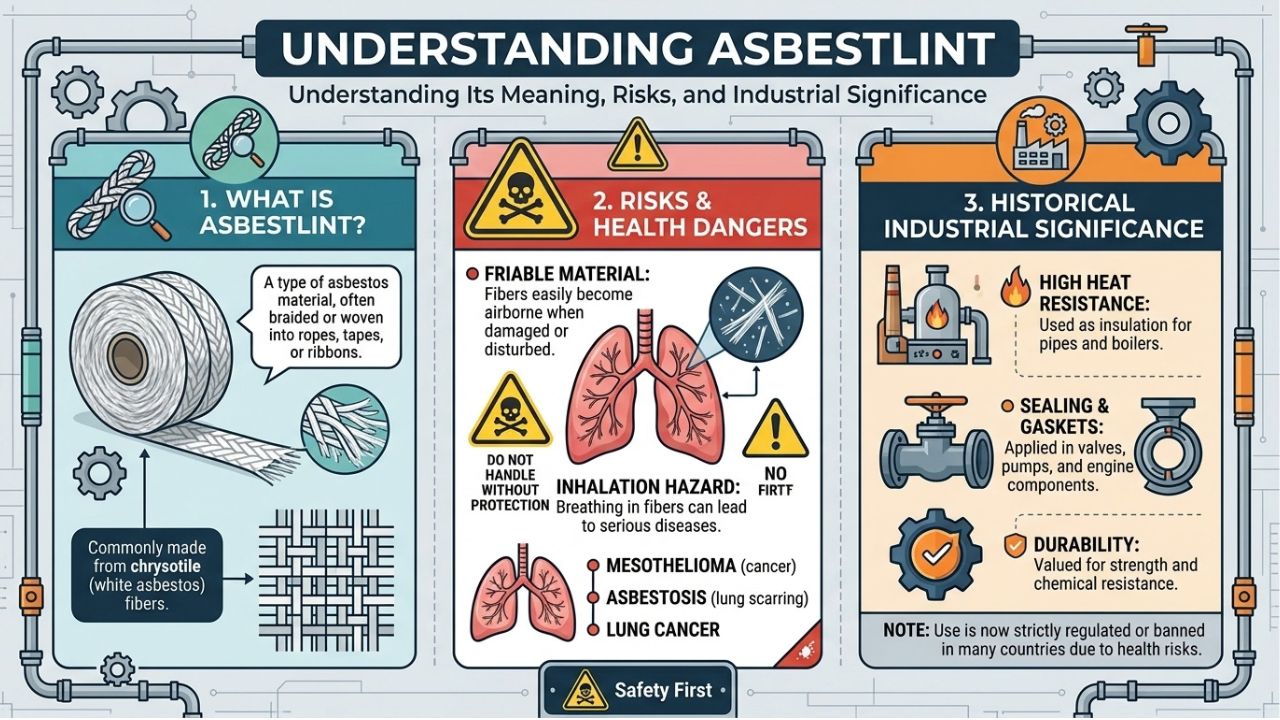
The term asbestlint refers to a material historically associated with asbestos-based binding or tape-like industrial products used in construction and insulation. Over time, asbestlint has become a subject of major health and environmental concern due to the dangers linked to asbestos fibers. While it was once widely used for its heat resistance and durability, modern science has revealed serious risks associated with exposure, leading to strict regulations and global restrictions.
Today, understanding asbestlint is important not only from a historical or industrial perspective but also from a public health and safety standpoint. This article explores what it is, why it was used, the dangers it poses, and how industries have moved toward safer alternatives.
What Is Asbestlint?
Asbestlint is generally understood as a type of asbestos-containing material that may have been used in tape, sealing, or insulation applications. Asbestos itself is a naturally occurring mineral known for its heat resistance, strength, and insulating properties. These characteristics made it highly valuable in construction and industrial manufacturing during the 20th century.
In products like asbestlint, asbestos fibers were often combined with binding agents to create flexible strips or wrapping materials. These were commonly used in environments where heat resistance or fireproofing was required.
However, despite its usefulness in industrial applications, the risks associated with asbestos exposure eventually overshadowed its benefits.
Historical Use of Asbestlint
The use of asbestlint and similar asbestos-based products became widespread during the industrial boom of the early and mid-1900s. Industries valued asbestos for its durability and resistance to fire, electricity, and chemical damage.
Construction Industry
In construction, materials like asbestlint were used for insulating pipes, sealing joints, and protecting structures from high temperatures. Builders appreciated its affordability and long-lasting properties.
Industrial Applications
Factories and power plants also used asbestos-based materials for insulating machinery and preventing heat loss. Asbestlint was seen as a practical solution for maintaining operational safety in high-temperature environments.
Automotive Sector
In some cases, asbestos materials were used in vehicle components such as gaskets and heat shields due to their ability to withstand friction and heat.
At the time, the long-term health consequences were not fully understood, leading to widespread adoption across multiple industries.
Health Risks Associated with Asbestlint
Modern research has confirmed that asbestlint and other asbestos-containing materials pose serious health hazards when fibers are released into the air and inhaled.
Respiratory Diseases
Exposure to asbestos fibers can lead to severe lung conditions. Once inhaled, the fibers may become trapped in lung tissue, causing inflammation and long-term damage.
Asbestosis
One of the most well-known conditions linked to asbestos exposure is asbestosis, a chronic lung disease that results in scarring of lung tissue and difficulty breathing.
Cancer Risks
Long-term exposure to asbestos has been associated with certain types of cancer, including lung cancer and mesothelioma, a rare but aggressive cancer affecting the lining of the lungs.
Latency Period
One of the most dangerous aspects of asbestos-related diseases is their long latency period. Symptoms may take decades to appear after initial exposure, making early detection difficult.
Because of these risks, handling or disturbing materials like asbestlint is considered extremely hazardous in many countries.
Regulation and Restrictions on Asbestlint
As scientific evidence about asbestos dangers grew, governments around the world introduced strict regulations to limit or ban its use.
Global Bans
Many countries have completely banned the use of asbestos-containing materials, including products similar to asbestlint. These bans aim to protect workers and the general public from exposure.
Workplace Safety Laws
In industries where asbestos may still exist in older buildings, strict safety protocols are required. Workers must follow protective procedures to avoid exposure.
Environmental Controls
Regulations also address the safe disposal of asbestos materials to prevent contamination of soil and air.
Safe Handling and Risk Management
Because asbestlint may still exist in older structures, proper safety management is essential when dealing with it.
Professional Assessment
Specialized inspectors are typically required to identify asbestos-containing materials in buildings. This ensures accurate detection without unnecessary exposure.
Controlled Removal
If removal is necessary, it must be performed by trained professionals using protective equipment and containment procedures.
Avoiding Disturbance
One of the most important safety rules is to avoid disturbing suspected asbestos materials, as this increases the risk of fiber release.
Protective Equipment
In regulated environments, specialized respiratory protection and safety clothing are used to reduce exposure risks.
Alternatives to Asbestlint
Modern industries have developed safer alternatives to replace asbestos-based materials like asbestlint.
Fiberglass Insulation
Fiberglass is commonly used as a safe alternative due to its heat resistance and durability.
Ceramic Fibers
Ceramic-based materials are used in high-temperature environments where asbestos was previously common.
Synthetic Insulation Materials
Advancements in polymer technology have led to the development of lightweight and non-toxic insulation solutions.
Mineral Wool
Mineral wool provides excellent thermal insulation and is widely used in construction today.
These alternatives offer similar performance benefits without the serious health risks associated with asbestos.
Environmental Impact of Asbestlint
The environmental concerns surrounding asbestlint are significant. When asbestos materials deteriorate, fibers can be released into the air or contaminate soil and water sources.
Soil Contamination
Improper disposal of asbestos materials can lead to long-term soil contamination, affecting ecosystems.
Air Pollution
Airborne fibers pose risks not only to humans but also to animals and surrounding environments.
Long-Term Persistence
Asbestos fibers do not break down easily, meaning environmental contamination can persist for decades.
Because of these risks, strict environmental regulations govern the handling and disposal of asbestos-containing materials.
Detection and Identification
Identifying asbestlint in older buildings requires specialized techniques. Since asbestos fibers are not visible to the naked eye, laboratory testing is often necessary.
Sampling Methods
Professionals collect small samples under controlled conditions to prevent exposure.
Laboratory Analysis
Microscopic analysis is used to confirm the presence of asbestos fibers in materials.
Building Surveys
Comprehensive surveys help determine whether asbestos-containing materials are present in structures before renovation or demolition.
The Shift Away from Asbestlint
The global shift away from asbestlint reflects growing awareness of health and environmental safety. Industries have largely replaced asbestos-based materials with safer, more sustainable alternatives.
This transition represents an important step in industrial development, prioritizing human health while maintaining performance standards in construction and manufacturing.
Conclusion
Asbestlint is a term closely linked to asbestos-based materials that were once widely used for their durability and heat resistance. However, scientific research has revealed serious health risks associated with asbestos exposure, leading to global restrictions and safer alternatives.
Today, understanding asbestlint is essential for historical awareness, industrial safety, and environmental protection. While it remains present in older buildings, strict regulations and modern materials have significantly reduced its use in contemporary construction.
By recognizing the dangers and promoting safe handling practices, societies continue to move toward healthier and more sustainable building environments.