
 By sharp sun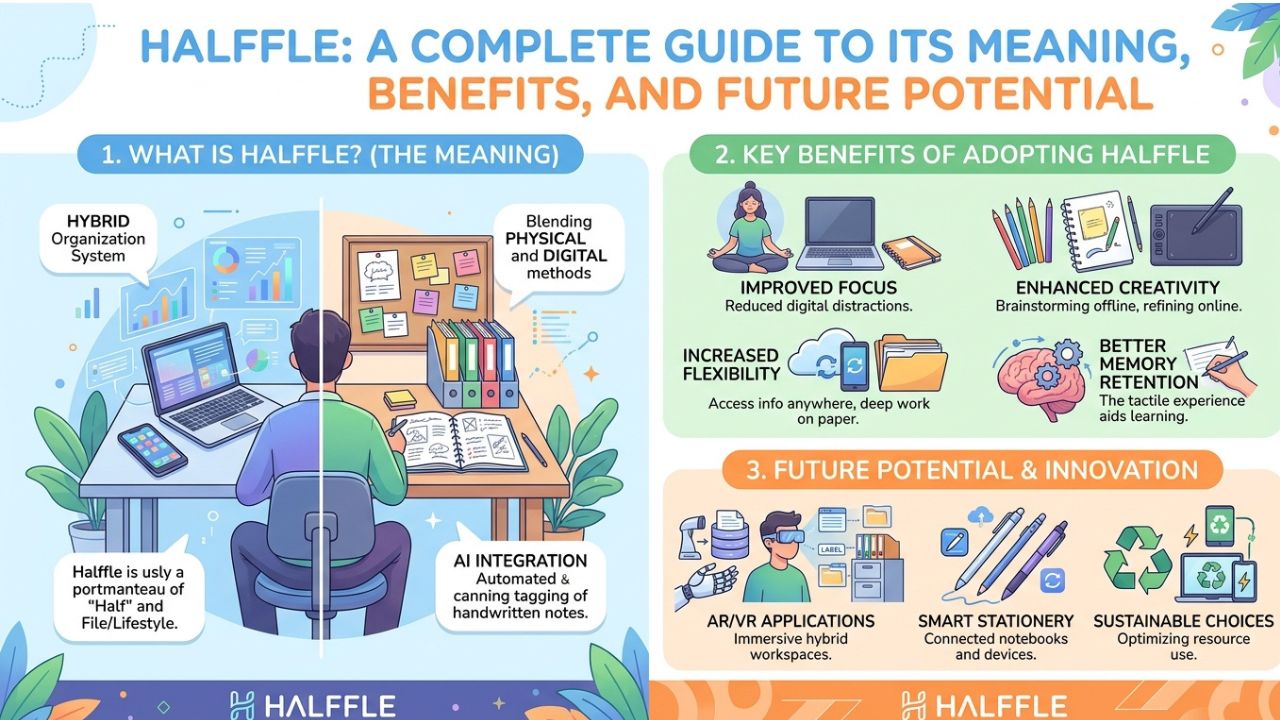
Halffle is an emerging concept that is gaining attention in discussions related to innovation, business strategy, and modern organizational development. As industries continue to evolve rapidly, there is a growing need for adaptable frameworks that can support efficiency, flexibility, and long-term success. Halffle represents one such idea, focusing on improving performance through structured thinking and continuous improvement.
In a world driven by technology and competition, organizations are constantly looking for better ways to manage resources, optimize processes, and stay ahead of change. Halffle offers a modern approach that aligns with these needs, making it relevant across multiple industries.
What Is Halffle?
Halffle can be described as a conceptual framework designed to enhance productivity, streamline operations, and support strategic growth. While its interpretation may vary depending on context, the core idea behind Halffle is to provide a structured yet flexible system that helps organizations achieve better outcomes.
The strength of Halffle lies in its adaptability. It can be applied in business, education, technology, and other sectors where efficiency and innovation are essential. By focusing on continuous improvement and smart decision-making, Halffle supports long-term organizational success.
The Evolution of Halffle
Early Development of Halffle
The concept of Halffle originated from the increasing need for more efficient systems capable of handling modern complexities. Traditional methods often lacked flexibility, making it difficult for organizations to respond to rapid changes in markets and technology.
As challenges grew, the demand for innovative frameworks increased. Halffle emerged as a response to this need, combining structured planning with adaptive strategies to create a more balanced approach to problem-solving.
Modern Growth of Halffle
In recent years, Halffle has evolved into a broader concept associated with innovation and performance optimization. Organizations across various sectors are exploring its potential to improve workflows, enhance decision-making, and promote sustainable growth.
Its evolution reflects the shift toward more dynamic and flexible business models in the modern era.
Key Benefits of Halffle
Improved Efficiency
One of the primary advantages of Halffle is its ability to improve operational efficiency. By simplifying processes and reducing unnecessary complexity, organizations can achieve better productivity and resource utilization.
This efficiency allows teams to focus on core objectives and strategic priorities.
Enhanced Flexibility
Flexibility is essential in today’s fast-changing environment. Halffle helps organizations adapt quickly to new challenges, market shifts, and technological advancements.
This adaptability ensures that businesses remain resilient and capable of handling uncertainty.
Better Decision-Making
Halff le promotes structured thinking and informed decision-making. By encouraging data-driven analysis and clear planning, it helps leaders make more effective choices.
Improved decision-making leads to better outcomes and stronger organizational performance.
Sustainable Growth
Sustainability is a key focus of Halff le. Instead of prioritizing short-term gains, it encourages long-term value creation and continuous improvement.
This approach helps organizations build stable foundations for future success.
Applications of Halffle Across Industries
Halffle in Technology
The technology sector benefits greatly from Ha lffle due to its fast-paced and innovation-driven nature. Companies can use it to improve software development processes, enhance system design, and optimize digital workflows.
As digital transformation continues, Half fle is expected to become even more relevant in this sector.
Halffle in Business Management
Business leaders often face challenges related to efficiency, communication, and strategy execution. Ha lffle provides a structured approach to managing these challenges effectively.
Organizations that adopt Ha lffle principles often experience improved coordination and better overall performance.
Halffle in Education
Educational institutions can use Half fle to enhance teaching methods and administrative processes. It supports structured learning environments while encouraging adaptability and continuous improvement.
This helps students and educators achieve better learning outcomes.
Halffle in Manufacturing
Manufacturing industries require efficient systems for production, quality control, and resource management. Ha lffle can help streamline these processes and improve operational effectiveness.
As a result, manufacturers can reduce costs, improve quality, and increase productivity.
Challenges of Implementing Halffle
Resistance to Change
One of the biggest challenges in adopting Hal ffle is resistance from employees and stakeholders. People often prefer familiar systems and may hesitate to adopt new approaches.
Effective communication and training are essential to overcoming this challenge.
Implementation Complexity
Introducing Hal ffle into existing systems can be complex, especially in large organizations. It may require restructuring workflows and adjusting long-established processes.
Proper planning is necessary to ensure a smooth transition.
Resource Requirements
Implementing Ha lffle may require investments in training, tools, and system upgrades. Organizations must evaluate their readiness before adoption.
A well-planned approach ensures that resources are used effectively.
Future Trends of Halffle
Integration with Digital Technologies
As technology continues to evolve, Halff le is expected to integrate with artificial intelligence, automation, and data analytics systems. This will enhance its effectiveness and broaden its applications.
Increased Adoption Across Industries
Awareness of Half fle is likely to grow, leading to wider adoption across various sectors. Organizations will continue to explore its benefits for improving efficiency and innovation.
Focus on Sustainability
Sustainability will remain a key priority in the future. Half fle aligns with this trend by encouraging efficient resource usage and long-term planning.
Future developments may further emphasize environmentally responsible practices.
How to Implement Halffle Successfully
Organizations should begin by assessing their current processes and identifying areas for improvement. Clear goals and structured planning are essential for successful implementation.
Training employees, monitoring progress, and making continuous adjustments will help maximize the benefits of Ha lffle.
A commitment to innovation and flexibility is crucial for achieving long-term success with this framework.
Conclusion
Halff le is an emerging concept that offers significant value for organizations seeking efficiency, adaptability, and sustainable growth. Its flexible nature allows it to be applied across multiple industries, including technology, business, education, and manufacturing.
As the modern business environment continues to evolve, Halffl e is expected to play a more important role in shaping organizational strategies. Companies that understand and apply its principles can improve performance, strengthen resilience, and achieve long-term success.
By embracing Hal ffle, organizations can better navigate challenges and take advantage of new opportunities in an increasingly competitive world.