
 By sharp sun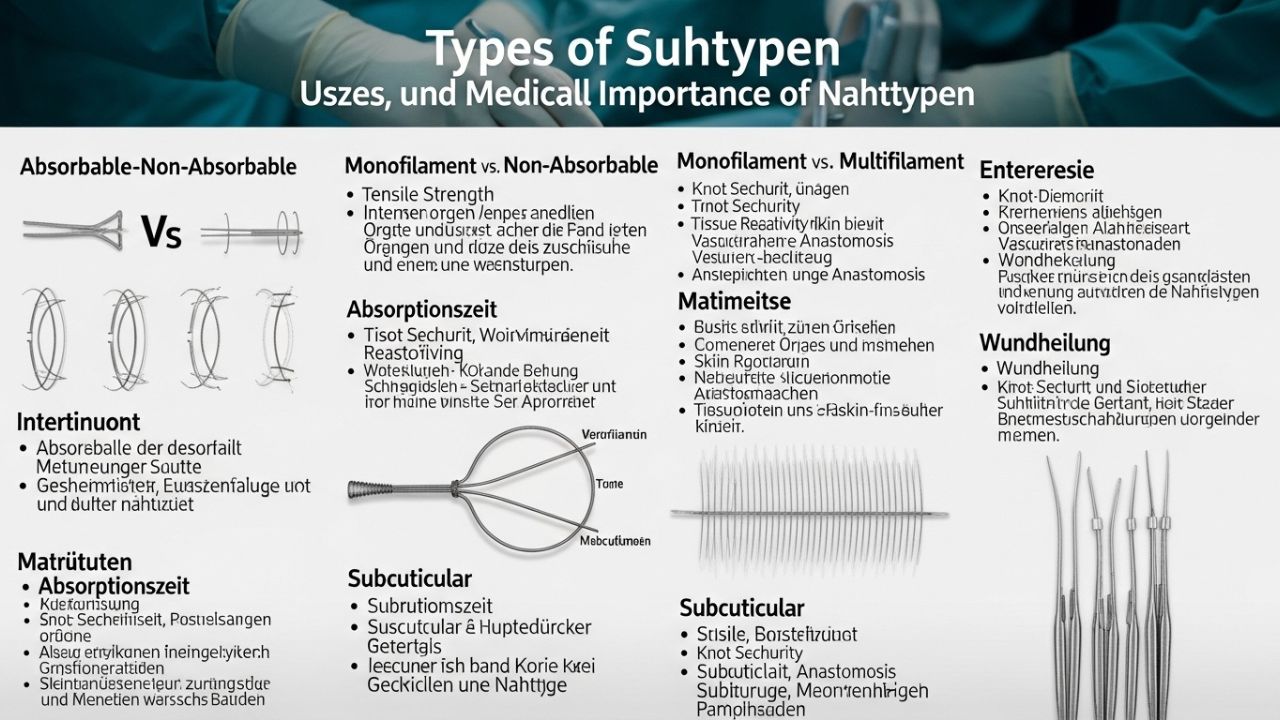
The term Nahttypen refers to different types of sutures used in medical and surgical procedures to close wounds, incisions, or injuries. In medicine, Nahttypen play a critical role in ensuring proper healing, reducing infection risk, and improving cosmetic outcomes after surgery. Understanding Nahttypen is essential for medical students, healthcare professionals, and anyone interested in surgical care, as different suturing techniques are used depending on the type of wound and tissue involved.
In modern surgery, Nahttypen are selected carefully based on factors such as wound location, depth, tension, and healing time. The correct choice of Nahttypen ensures faster recovery and minimal scarring while maintaining tissue strength during the healing process.
Nahttypen and Basic Concept of Nahttypen
Nahttypen refers to the classification of suturing techniques used to join tissues together after injury or surgical intervention. These sutures can be performed using different materials and methods depending on medical requirements.
The main purpose of Nahttypen is to:
- Close open wounds
- Support tissue healing
- Reduce bleeding
- Minimize infection risk
- Improve cosmetic healing outcomes
Each Nahttypen technique is designed for specific medical situations, making it an important part of surgical practice.
Nahttypen and Classification of Nahttypen
There are several major categories of Nahttypen used in medical practice. These categories are based on how the stitches are applied and how long they remain in the body.
Interrupted
Interrupted Nah ttypen involve placing individual stitches separately. Each stitch is tied independently, which allows better control and security. If one stitch fails, the others remain intact. This makes interrupted Nahtty pen very reliable for high-tension wounds.
Continuous
Continuous Nah ttypen use a single thread to close the entire wound in a running stitch pattern. This method is faster than interrupted sutures and is commonly used in surgeries where speed and efficiency are important.
Subcuticular
Subcuticular Nahtt ypen are placed just under the skin surface. These sutures are often used for cosmetic purposes because they reduce visible scarring and provide a smoother healing appearance.
Nahttypen and Absorbable
Absorbable Nah ttypen are sutures that naturally dissolve in the body over time. These are commonly used inside the body where removing stitches is not practical.
Examples of absorbable Nahtt ypen include materials like polyglycolic acid and polylactic acid. These sutures gradually break down as the wound heals, eliminating the need for removal.
Absorbable Nahtty pen are often used in internal organs, muscles, and deeper tissue layers.
Nahttypen and Non-Absorbable
Non-absorbable Nah ttypen are sutures that do not dissolve and must be removed after healing or may remain permanently inside the body.
These Na httypen are used for:
- Skin closure
- Cardiovascular surgery
- Long-term tissue support
Materials like nylon, silk, and polypropylene are commonly used in non-absorbable Nah ttypen.
Nahttypen in Surgical Applications
Different Nahtty pen are selected based on the type of surgery and tissue involved. Surgeons carefully choose the appropriate technique to ensure proper healing and reduce complications.
In skin surgeries, cosmetic Nahtt ypen are preferred to minimize scarring. In internal surgeries, absorbable Naht typen are often used to avoid the need for removal procedures.
Proper selection of Nahtty pen is essential for patient safety and successful surgical outcomes.
Importance in Wound Healing
The role of Nahtt ypen in wound healing is extremely important. Sutures help bring tissue edges together, allowing the body to repair itself more effectively.
Good Nah ttypen techniques help:
- Speed up healing
- Reduce infection risk
- Improve tissue strength
- Minimize scar formation
Without proper Nahtt ypen, wounds may heal poorly or lead to complications.
Nahttypen and Modern Surgical Techniques
Modern medicine has improved Nah ttypen techniques with advanced materials and tools. Surgeons now use finer sutures, better needles, and improved stitching methods to enhance patient outcomes.
Minimally invasive surgeries also rely on precise Nahtty pen to ensure internal wounds heal properly without large external scars.
Technology has made Naht typen safer, faster, and more effective than ever before.
Nahttypen Challenges and Considerations
Despite advancements, selecting the correct Nah ttypen can be challenging. Factors such as patient condition, wound type, and infection risk must be considered carefully.
Improper use of Nahtty pen can lead to complications such as wound reopening, infection, or excessive scarring. Therefore, proper medical training is essential for handling different Nah ttypen effectively.
Nahttypen Future
The future of Naht typen is expected to include more advanced materials and automated stitching technologies. Research is ongoing into self-dissolving sutures and smart materials that can promote faster healing.
As medical technology continues to evolve, Naht typen will become even more efficient, reducing surgery time and improving patient recovery outcomes.
Conclusion
In conclusion, Na httypen are a fundamental part of surgical medicine, responsible for wound closure, tissue healing, and post-operative recovery. Different Nahtty pen techniques such as interrupted, continuous, absorbable, and non-absorbable sutures are used depending on medical needs.
The proper selection and application of Nahtty pen ensure better healing, reduced complications, and improved patient outcomes. As medical science advances, Naht typen will continue to evolve, offering safer and more effective solutions in surgery.