
 By sharp sun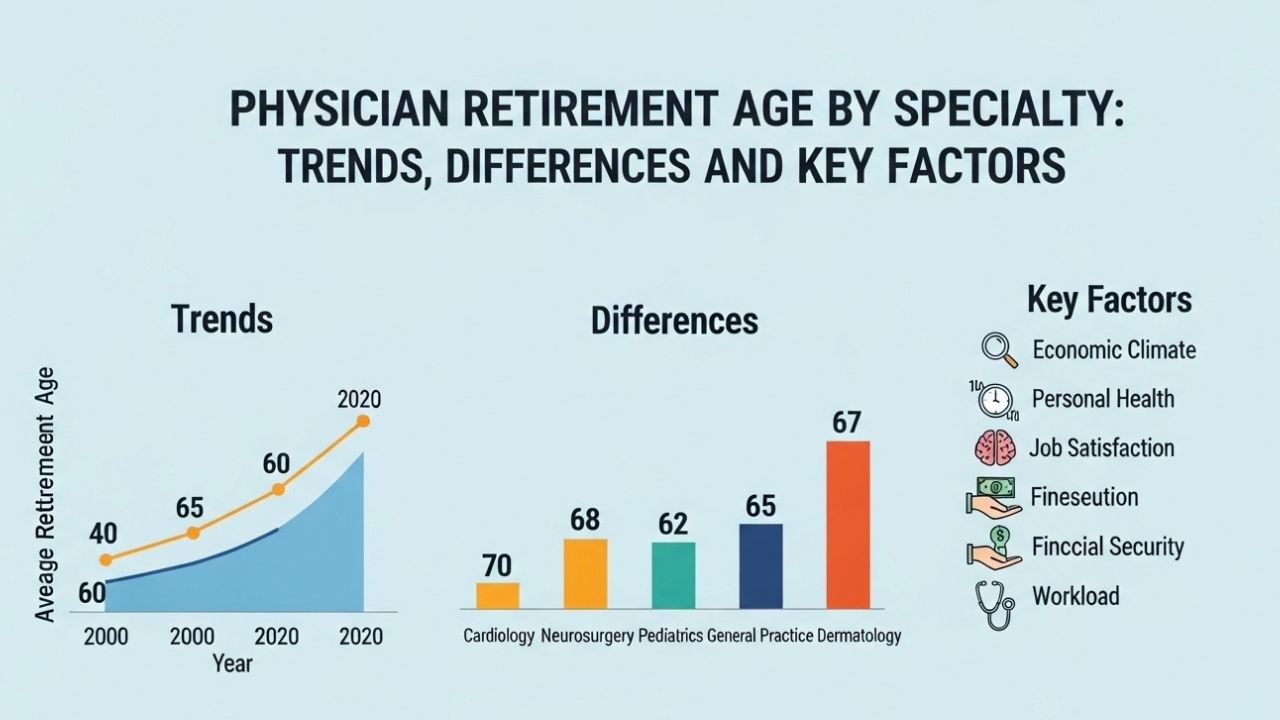
Physician Retirement Age by Specialty varies widely across the medical profession because different specialties place different levels of physical, mental, and emotional demand on doctors. Unlike many careers that have a fixed retirement age, physicians often choose when to retire based on health, workload, financial stability, and job satisfaction.
In general, Physician Retirement Age by Specialty typically ranges from the early 60s to the mid or late 70s. However, some doctors continue practicing even beyond that, especially in less physically demanding fields such as psychiatry, radiology, or pathology. Understanding these differences helps explain how career structure, workload intensity, and lifestyle influence retirement decisions in medicine.
What is Physician Retirement Age by Specialty?
Physician Retirement Age by Specialty refers to the typical age at which doctors in different medical fields choose to retire or reduce their clinical workload. There is no universal retirement rule for physicians, so retirement patterns depend on specialty type, practice setting, and individual preferences.
Some doctors transition into part-time work, consulting roles, or teaching positions instead of fully retiring. This flexible approach allows many physicians to remain active in medicine while reducing workload stress.
General Physician Retirement Age Trends
Across most healthcare systems, the average physician retirement age falls between 65 and 70 years. However, this range is not fixed.
- Early retirement: 60–65 years
- Standard retirement: 65–70 years
- Extended practice: 70+ years
Many physicians gradually reduce working hours before fully retiring, especially in later career stages.
Physician Retirement Age by Specialty: Surgical Fields
Surgical specialties tend to have earlier retirement ages due to high physical and mental demands.
1. General Surgery
General surgeons often retire between 60 and 67 years due to long hours, emergency cases, and physical strain.
2. Orthopedic Surgery
Orthopedic surgeons commonly retire between 60 and 68 years because procedures require strength, stamina, and precision.
3. Cardiothoracic Surgery
This highly demanding field often leads to retirement between 60 and 65 years, as surgeries are long and complex.
Surgical specialties generally show earlier Physician Retirement Age by Specialty because even small declines in performance can affect patient safety.
Physician Retirement Age by Specialty: Medical Non-Surgical Fields
Non-surgical specialties usually allow for longer careers due to less physical strain.
1. Internal Medicine
Internal medicine physicians often retire between 65 and 72 years, depending on workload and practice setting.
2. Cardiology
Cardiologists typically retire between 65 and 70 years, although some continue part-time practice beyond this.
3. Endocrinology
Endocrinologists often retire between 66 and 75 years, especially in outpatient-focused roles.
These specialties rely more on cognitive skills, allowing extended working years.
Physician Retirement Age by Specialty: Diagnostic Fields
Diagnostic specialties often have the highest retirement ages in medicine.
1. Radiology
Radiologists commonly retire between 67 and 75 years, and many continue working remotely or part-time.
2. Pathology
Pathologists often retire between 67 and 75+ years, especially in academic or consulting roles.
3. Laboratory Medicine
This field allows flexible work environments, with many physicians working beyond 70 years.
These specialties allow longer careers due to lower physical demands and increased digital workflows.
Physician Retirement Age by Specialty: Psychiatry and Behavioral Health
Psychiatry is one of the longest-practicing medical fields.
1. Psychiatry
Psychiatrists often retire between 67 and 75+ years, and many continue part-time practice well beyond traditional retirement age.
Psychiatry allows extended careers because it relies heavily on communication, experience, and clinical judgment rather than physical procedures.
Factors Influencing Physician Retirement Age by Specialty
Several factors determine when physicians retire:
1. Physical Demands
Surgical fields require more physical stamina, leading to earlier retirement.
2. Mental and Emotional Stress
High-pressure specialties may lead to burnout and earlier retirement.
3. Financial Security
Doctors with strong savings or investments may retire earlier.
4. Job Satisfaction
Enjoyment of work can extend a physician’s career significantly.
5. Technological Advances
Technology reduces workload in some specialties, allowing longer practice.
6. Institutional Policies
Some hospitals encourage transition into advisory or teaching roles with age.
Early Retirement vs Extended Medical Practice
Physician Retirement Age by Specialty is increasingly flexible, with many doctors choosing alternative career paths instead of full retirement.
Early Retirement
- Burnout
- Health issues
- Desire for lifestyle change
Extended Practice
- Part-time clinical work
- Teaching and mentoring
- Telemedicine roles
- Consulting positions
This shift reflects modern changes in healthcare structure and workforce flexibility.
Impact of Aging on Physicians
Aging can affect clinical practice in different ways:
- Reduced physical stamina
- Slower response in high-pressure situations
- Increased experience and clinical judgment
- Greater reliance on pattern recognition
Many institutions now use performance-based assessments rather than strict age limits.
Future Trends in Physician Retirement Age by Specialty
The future is likely to bring higher retirement ages due to:
- Growth of telemedicine
- AI-assisted diagnostics
- Less physically demanding procedures
- Flexible part-time roles
- Improved physician wellness programs
These changes may allow physicians across many specialties to practice safely for longer periods.
Conclusion
Physician Retirement Age by Specialty is not fixed and varies significantly depending on the type of medical practice. Surgical specialties generally have earlier retirement due to physical demands, while diagnostic and psychiatric fields often allow longer careers. Ultimately, retirement decisions depend on health, satisfaction, financial readiness, and work environment. With evolving healthcare systems and technology, physicians are increasingly able to extend their careers in flexible and meaningful ways.